

Drug Overview
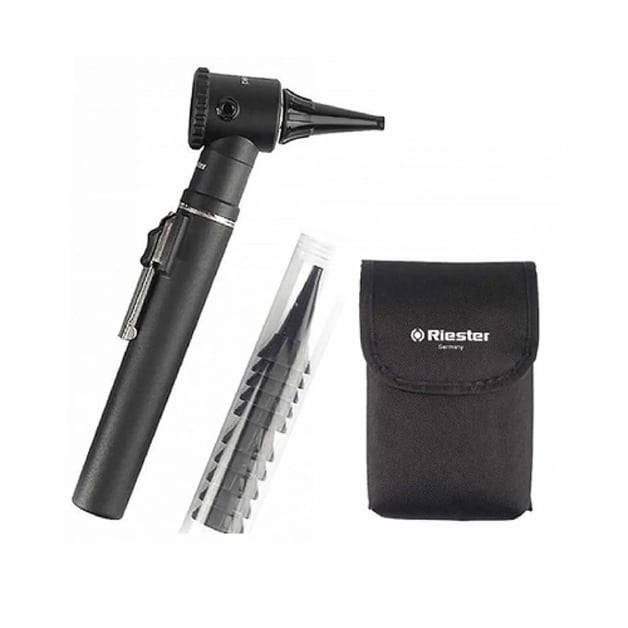
The Otoscope 2056 Black by Riester is a professional diagnostic device designed for accurate ear examination. This pen-style otoscope (penscope) combines German engineering with practical usability, making it suitable for daily clinical practice. It is widely used by healthcare professionals to inspect the external ear and auditory canal with precision and clarity.
Active Ingredient and Composition
Although not a pharmaceutical product, the device consists of:
- High-quality optical lens system
- 2.7V incandescent illumination bulb
- Durable black casing made from medical-grade materials
- Protective storage case
Drug Class
- Medical diagnostic device
- ENT (Ear, Nose, and Throat) examination tool
- Handheld otoscope (Penscope type)
Uses and Medical Indications of Otoscope 2056 Black
The Otoscope 2056 Black is used for:
- Examination of the external ear (auricle)
- Inspection of the ear canal (auditory canal)
- Detection of conditions such as:
- Ear infections including otitis externa and otitis media
- Earwax buildup (cerumen impaction)
- Foreign bodies in the ear
- Routine ENT diagnostic assessments
It is ideal for:
- Clinics and hospitals
- Pharmacies offering basic diagnostic services
- Medical students during training
How Otoscope 2056 Black Works
The device uses a 2.7V illumination system to provide bright, focused light inside the ear canal. Combined with magnification optics, the Otoscope 2056 Black enhances visualization of internal ear structures, enabling accurate clinical evaluation.
Dosage and Administration
Since this is a diagnostic tool, usage guidelines include:
- Turn on the device and verify proper illumination
- Gently insert the otoscope into the ear canal
- Examine the ear structures carefully without applying pressure
- Use appropriate disposable specula when necessary
Best used by trained healthcare professionals to ensure diagnostic accuracy.
Possible Side Effects
The device is generally safe; however, improper use may lead to:
- Minor discomfort
- Ear canal irritation
- Risk of injury if inserted too deeply
Contraindications
- Avoid use in severe ear trauma without medical supervision
- Avoid use with uncooperative patients, especially children, without assistance
- Not a substitute for advanced ENT instruments when specialized examination is required
Drug Interactions
Not applicable as this is a non-pharmaceutical device. However, it may be used alongside ear drops or other treatments for diagnostic follow-up and monitoring.
Warnings and Precautions
- Do not insert deeply into the ear canal
- Clean the device after each use
- Use sterile or disposable tips when possible
- Store in the provided case to prevent damage
- Keep out of reach of children
Use During Pregnancy and Breastfeeding
Safe to use for examination during pregnancy and breastfeeding, as it is a non-invasive diagnostic device.
Use for Children
- Suitable for pediatric use
- Must be handled carefully due to smaller ear canals
- Preferably used by trained healthcare professionals
Drug Alternatives
Other similar diagnostic tools include:
- LED otoscopes for brighter, more energy-efficient illumination
- Fiber-optic otoscopes
- Digital otoscopes with integrated camera systems
Comparison With Similar Drugs
Compared with standard otoscopes, the Otoscope 2056 Black offers:
- Compact pen-style design
- Lightweight portability
- Reliable German build quality
Compared with LED models:
- Uses incandescent illumination instead of LED
- May be less energy-efficient, while still providing clear visibility for routine examinations
Safe Usage Tips
- Check light functionality before every use
- Avoid sharing without proper sterilization
- Handle gently to preserve optical accuracy
- Replace bulbs when illumination becomes weak
Conclusion
The Otoscope 2056 Black is a reliable, high-quality diagnostic tool that combines precision, portability, and German engineering. Whether used in clinics, pharmacies, or medical training, Otoscope 2056 Black supports accurate ear examination and helps healthcare professionals perform clear and efficient assessments in everyday practice.